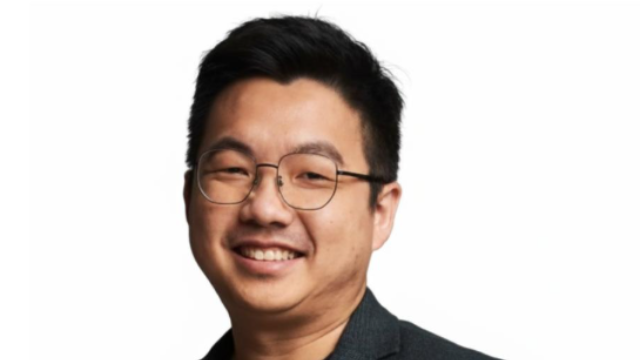
From Data Entry to Strategic Insight: The New Role of Accountants: A Conversation with Guest Expert Mr. Wei Khjan Chan
By Devakumar A/L Robert William, Senior Executive, BAC College and Nevash Nithi, Content Writer, BAC College
Artificial intelligence is changing how accounting and finance professionals work. Routine tasks are shifting to automation, leaving more time for strategic decision-making. For students, school leavers, and working adults, this raises an important question: what will the profession look like, and where do I fit in?
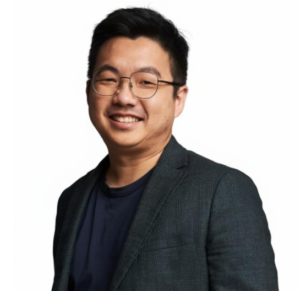
As part of the Guest Expert Interview Series, we speak with Mr. Wei Khjan Chan, Co-Founder of SuperAgentK, an AI automation company for the accounting and finance sector. He began his career as an auditor at KPMG Singapore before moving into corporate advisory, financial leadership, and AI adoption as Partner, AI Adoption and Deployment at YYC Advisors. He also serves on the Malaysian Institute of Accountants (MIA) AI Advisory Group and mentors practitioners through the MIA SMP Digital Accelerator Program.
Here, Mr. Chan shares his views on how AI is changing finance careers, what employers expect from new graduates, and how professionals can adapt to new technology.
1. You moved from accounting at KPMG Singapore to advisory work and then to building AI products. What inspired each of those steps?
I started my career as an auditor in Singapore, and over the years, I have seen the industry change a lot. I was born in 1986, when parents held accountancy in high regard. They encouraged their children to become an accountant, a doctor, a lawyer or an engineer.
After 2010, accounting fell out of the top tier of professions. People still talked about engineers and doctors, and lawyers. To be honest, the starting pay for accountants was not as promising compared to those fields, even though market demand for accountants remained strong.
The main issue is that most accountants start by processing large amounts of data without much help from technology. Not everyone works in a large company with full enterprise resource planning (ERP) systems to support their daily work. As a result, many accountants get stuck doing repetitive data entry. They have little time left for their real job, which is not just reporting numbers, but explaining what those numbers mean for business decisions.
When ChatGPT launched four years ago, I began paying close attention to how AI was developing. By last year, I saw that AI tools were ready for daily accounting work. I decided to branch out and show the market how to use AI, not only to improve productivity, but also to increase the value accountants bring to a business. I believe AI will make the accounting profession even more relevant today.
2. Through your mentoring with MIA, what gaps do you see in new accounting and finance graduates, and how can universities help better prepare them?
I speak at many university career talks across Malaysia and ASEAN, including a session in Indonesia a few weeks ago. Right now, students know how to use AI to get their work done. Even in today’s interview, you are using AI to take notes. What graduates lack is real working experience, and that simply takes time. When you enter an internship or a full-time job, the main challenge is learning how to work and communicate with people in an office.
I do not see a problem with graduates using AI at work. The real gap is in the business market. Company adoption is still very low. Out of 10 organisations, maybe only one or two have started using AI.
My advice to students is this: during a job interview, ask the company which AI tools they use. If they have not adopted any, think carefully before joining. Right now, many businesses are still hesitant about AI. If you join a company without AI tools, you will be stuck doing manual work until they finally decide to retrain their staff. You do not need to go through that slow process.
It is like getting a driving licence today. You can learn on an automatic car, and almost all new cars are automatic. Imagine getting your licence, only for your father to hand you an old manual car. You would have to spend time adjusting from manual to automatic, and later to self-driving cars. The gap is in the business world, not the universities.
At the end of the day, you must remain accountable for what you submit for your assignments at University. You cannot just feed assignment questions to an AI and copy the output. Some people do that, and reviewers can tell. The same applies in business. If you blindly copy and paste from AI, colleagues will notice your work habits, and it will hurt your professional relationships.
Instead, use AI as an assistant, just like recording this interview and then editing the draft yourself. You still spend time checking that the content is accurate and useful. That extra effort makes a big difference to the final result and genuinely boosts your productivity. Again, the gap is on the business side, not the university side.
3. How is AI automation changing the daily work of accountants and finance teams, and which human skills will matter most?
Let us look at a standard small and medium enterprise (SME) in Malaysia, where SMEs make up 90 per cent of all businesses. Traditionally, you take a physical or digital invoice and type the data into accounting software. At the end of every month, you pull reports from that system. Under this setup, a junior accountant enters the data, a senior accountant reviews it, and a manager presents the figures to leadership. Many companies still operate this way.
With AI, software can handle data entry, reconciliation, and basic reporting. Accountants will spend most of their time reviewing AI outputs. The main task then becomes turning those numbers into clear reports that directors and other departments can easily understand. You need to explain how the company is performing and why. Accountants should not spend all their time working behind the scenes on raw data. No matter how fast you type, data entry does not create business value. Your focus must shift to checking AI work and sharing useful insights with your team.
Today’s interview is a good example. In the past, you would record a conversation, spend an hour listening back to it, spend three or four hours writing the article, and have maybe an hour left to proofread. By then, you are tired, so you have less energy to improve the writing.
Now, AI records the session. You can go for lunch, and by the time you return, the AI has written a rough draft. You can instruct it to include or highlight specific points, and it updates the text right away. You then spend two hours reviewing and refining it to get a solid final piece. This exact shift is happening in accounting.
4. For students and working adults who feel worried about how fast things are changing, what would you advise them? What skills do they need to develop?
The job market for fresh graduates is tough right now because AI is taking over many junior-level tasks. However, as I mentioned earlier, the demand for accountants is still high, while fewer students are studying accounting. Companies have struggled to find fresh accounting graduates for years. So, AI entering the field is actually helpful. Even if there are slightly fewer entry-level openings, there are still more than enough jobs for accounting graduates.
Parents and business owners are also worried about AI, but you cannot stop this trend. Think back to the car example: very few people drive manual cars anymore, mostly just hobbyists. Most cars are automatic, and self-driving features are growing. You cannot refuse to change when the world around you is moving forward. To stay relevant, businesses and workers must learn these new tools.
It is just like the rise of social media. Years ago, there was no Meta, Instagram, or TikTok. Today, older generations often watch more social media videos than young people do. Technology changes naturally, and people eventually adapt. There is no need to panic.
5. What is the one piece of advice you would give to someone studying or shaping their career today?
I have a child in primary school, and my wife and I talk about this often. When we were in school, we learned two things: hard skills and soft skills. Hard skills are technical knowledge. In accounting, that means learning accounting standards and tax rules. In IT, that means learning coding languages.
Today, you can ask AI about almost any hard skill, and it will give you the answer. The danger is that people ask AI once and accept the first answer without checking further. You still need curiosity and persistence to verify facts and find the right context. Even if you want to know how to build a rocket, AI can explain it.
To be honest, I think memorising hard skills will become less important in school. I do not expect graduates to memorise entire rulebooks of accounting standards. I expect them to understand what the standards are for and know how to look up the details. It is like learning basic mental math: one plus one equals two. The goal is to build logical thinking, not to rely on pure memorisation.
Soft skills and people skills, however, are becoming much more valuable because AI cannot replace them. For example, today an AI assistant is taking notes for us, which is fine. But if I were being interviewed entirely by an AI bot, I would not have agreed to do it. Many parts of work and life still require a human touch. Once you finish a financial report, you still need creativity and communication skills to present it effectively to your readers.
At the end of the day, AI is just a tool to automate boring, repetitive tasks. That is its true value. My main advice is to focus on your soft skills. Build friendships, connect with people in your community, and help make your school or workplace a better environment for everyone.
Key Takeaways
Mr. Wei Khjan Chan’s career journey offers several practical lessons for anyone planning a future in accounting and finance:
· AI is changing the job, not replacing accountants. AI can handle routine tasks like data entry, reconciliation, and basic reporting. This frees up accountants to review the data and explain what it means for the business.
· Stay accountable for your work. Using AI to help with tasks is fine, but you must always check the output to make sure it is accurate and useful before sharing it.
· Ask about AI during job interviews. Joining a company that already uses AI tools will help you build relevant, modern work experience from day one.
· Graduates know AI, but need people skills. Learning how to communicate and work well with colleagues takes real-world practice.
· Stay curious and verify information. AI gives quick answers, so you need persistence and critical thinking to check the facts and understand the full context.
· Focus on soft skills. Good communication, creativity, and a human touch are qualities that AI cannot replace.
About the Guest Expert Interview Series
The Guest Expert Interview Series, hosted by Veritas University College, brings practical insights from experienced industry leaders to students, school leavers, working adults, and anyone building a career. Through real career stories and clear advice, our guests help readers understand the skills and mindset needed to succeed in their fields.